
By David Swanson, World BEYOND War, July 17, 2025
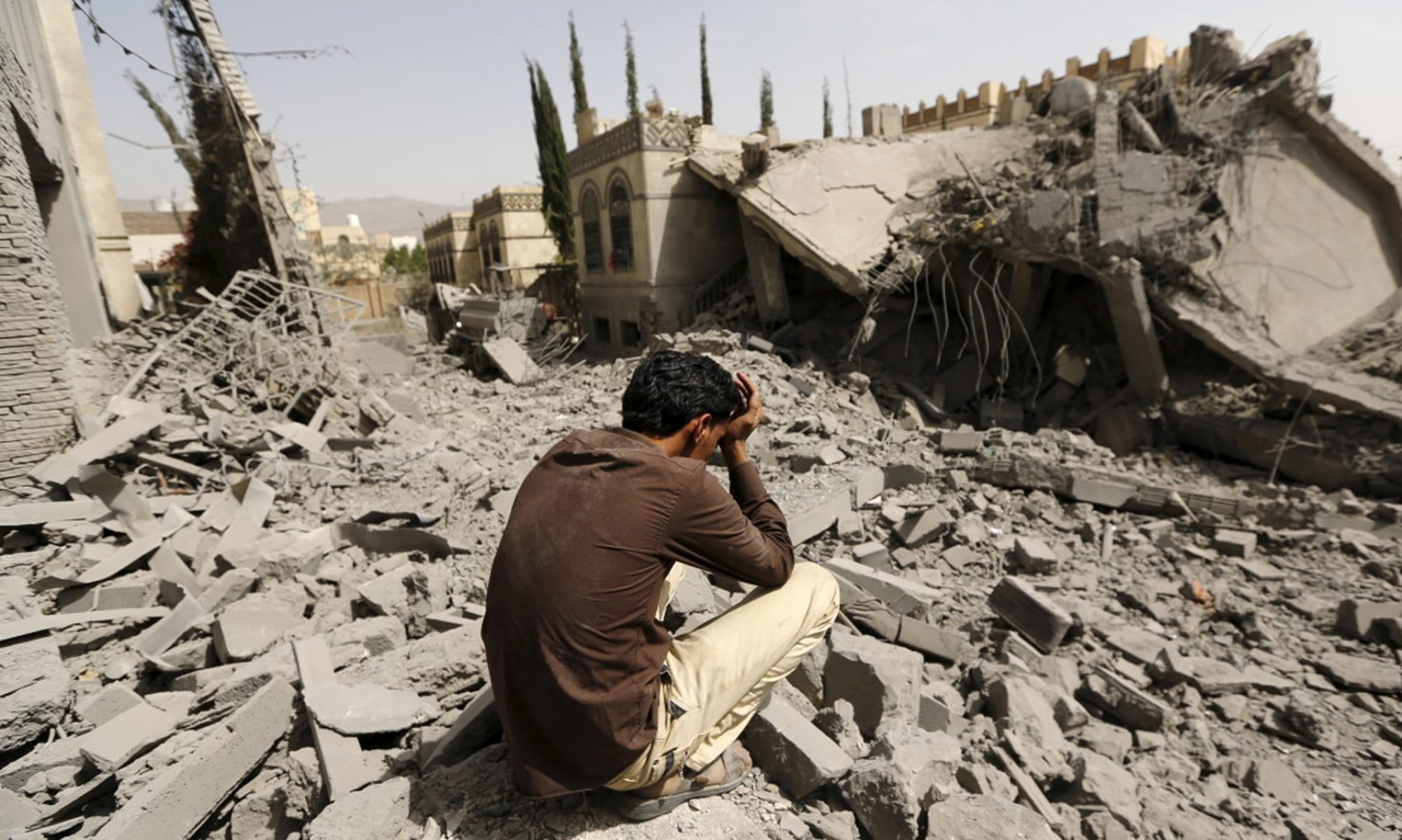
A year and three-quarters since the escalated genocidal assault on Gaza was launched, a year and a half since the International Court of Justice ordered Israel to halt its genocidal actions, eight months since the International Criminal Court issued an arrest warrant for the sitting prime minister of Israel, and following — throughout that time — repeated vetoes by the U.S. government in the United Nations Security Council and refusals by the UN General Assembly to circumvent that body despite constant public outcry for it to do so, 12 nations that manufacture virtually no weapons have jointly announced that they will not arm Israel.
Bolivia, Colombia, Cuba, Indonesia, Iraq, Libya, Malaysia, Namibia, Nicaragua, Oman, Saint Vincent and the Grenadines, and South Africa have committed to:
The proposal to use universal jurisdiction to prosecute Israelis is odd, given the actions already long since taken by the world courts based in the city for which this Hague Group of nations is named. As a BDS platform, the above seems to be missing the S. There are no targeted sanctions against Israeli officials, even as the U.S. government is sanctioning judges of the International Criminal Court. There is also no proposal here to expel Israel from the United Nations. There is also no proposal for boycotting, divesting from, and sanctioning other nations (such as the ones that, you know, manufacture weapons) that continue to arm Israel. And, while there is thankfully no disastrously misguided proposal for armed forces, there is also no proposal for unarmed peacekeeping. Presumably, all of those things are lacking because these nations are not trying to act through the United Nations at all, but separately. There is no mention of upholding the Arms Trade Treaty or any other law on the Hague Group’s webpage announcing this commitment.
But the PDF of the complete statement, linked from the bottom of that page, makes numerous introductory references to the United Nations, the International Court of Justice (though not the International Criminal Court), and international law.
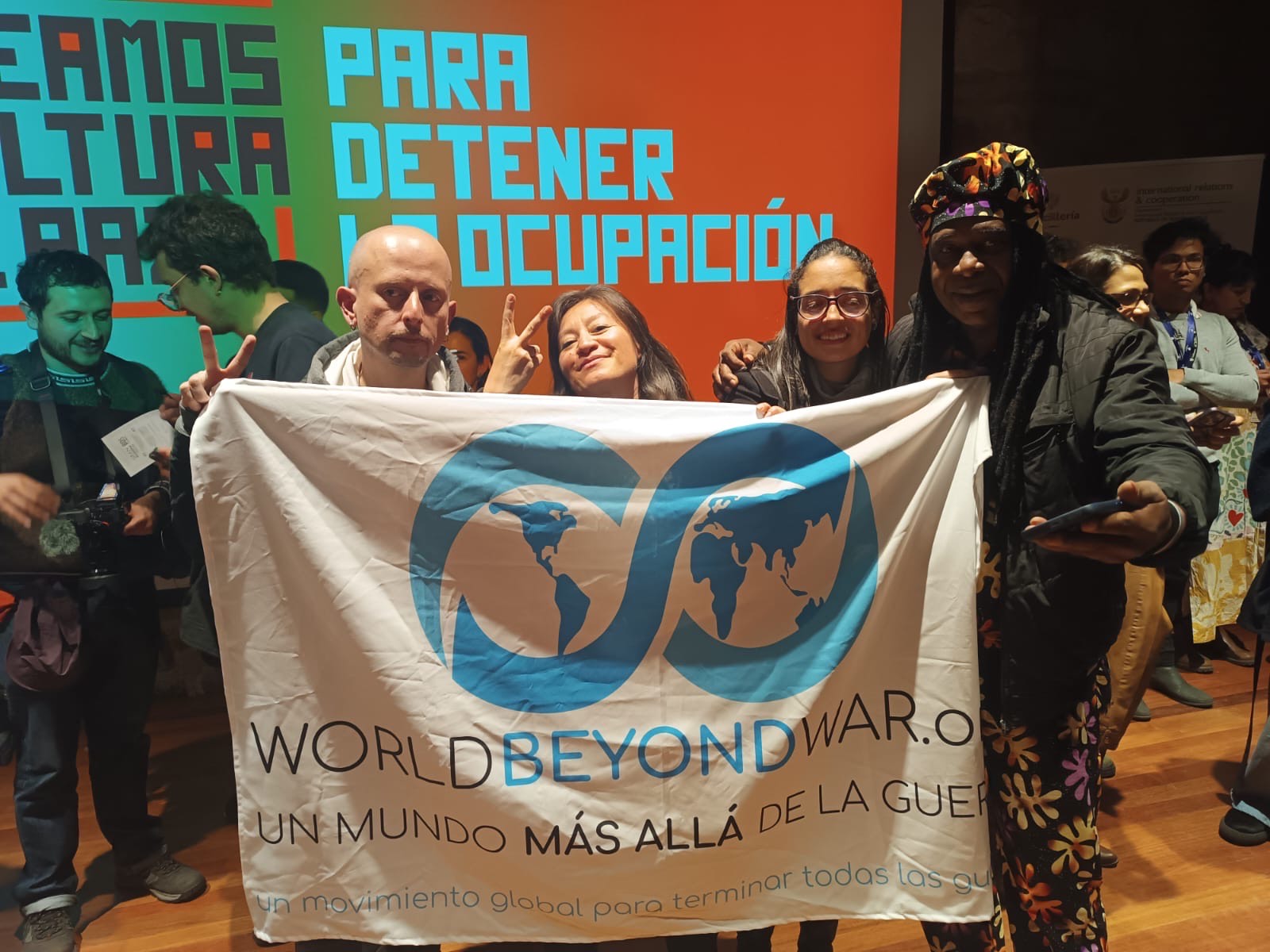
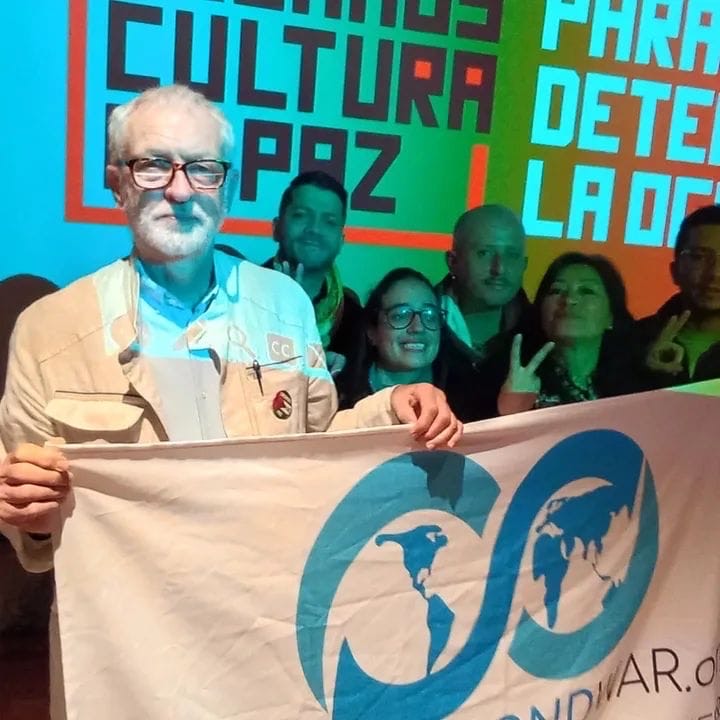
Not just 12 states have just met in Bogotá but approximately 30 (not counting those, such as the United States, there in opposition to any steps toward justice), and the statement is held open for others to sign onto it by September 20th.
There has to be a certain relief that, prior to the death of every last person in Gaza, some 6% of the world’s governments have made themselves willing enough to represent public outcry, and independent enough to defy the United States, to take steps that they were — at least for the most part — already taking. Something is better than nothing. The meeting in Colombia has produced useful statements, albeit mostly for those media outlets whose audiences have already known about the genocide in Gaza for close to two years.
This ought to be built on, but it ought to be built on in the direction of universalization, of reforming and democratizing the United Nations (chiefly through the elimination of the veto, or the development of courage and integrity in the General Assembly) or replacing it with an institution that applies the rule of law equally and swiftly to all.