In my town in the United States — as is not especially unusual — we have big memorials in prominent public places marking some of the most catastrophically immoral actions of the past. Unfortunately, all five of these major monuments celebrate and glorify these past horrors, rather than reminding us not to repeat them. The University of Virginia is building a memorial to the enslaved people who built the University of Virginia. So, we will have five celebrations of evil, and one cautionary remembrance thereof.
Two of the five monuments celebrate the genocide of the westward expansion across the continent. Two celebrate the losing and pro-slavery side of the U.S. Civil War. One honors the troops who participated in one of the most devastating, destructive, and murderous assaults on a small part of the earth that humanity has yet produced. In the United States people call it “the Vietnam war.”
In Vietnam it’s called the American war. But not just in Vietnam. This was a war that hit hard in Laos and Cambodia and Indonesia. For a well-researched and powerfully presented overview, check out the new book, The United States, Southeast Asia, and Historical Memory, Edited by Mark Pavlick and Caroline Luft, with contributions from Richard Falk, Fred Branfman, Channapha Khamvongsa, Elaine Russell, Tuan Nguyen, Ben Kiernan, Taylor Owen, Gareth Porter, Clinton Fernandes, Nick Turse, Noam Chomsky, Ed Herman, and Ngo Vinh Long.
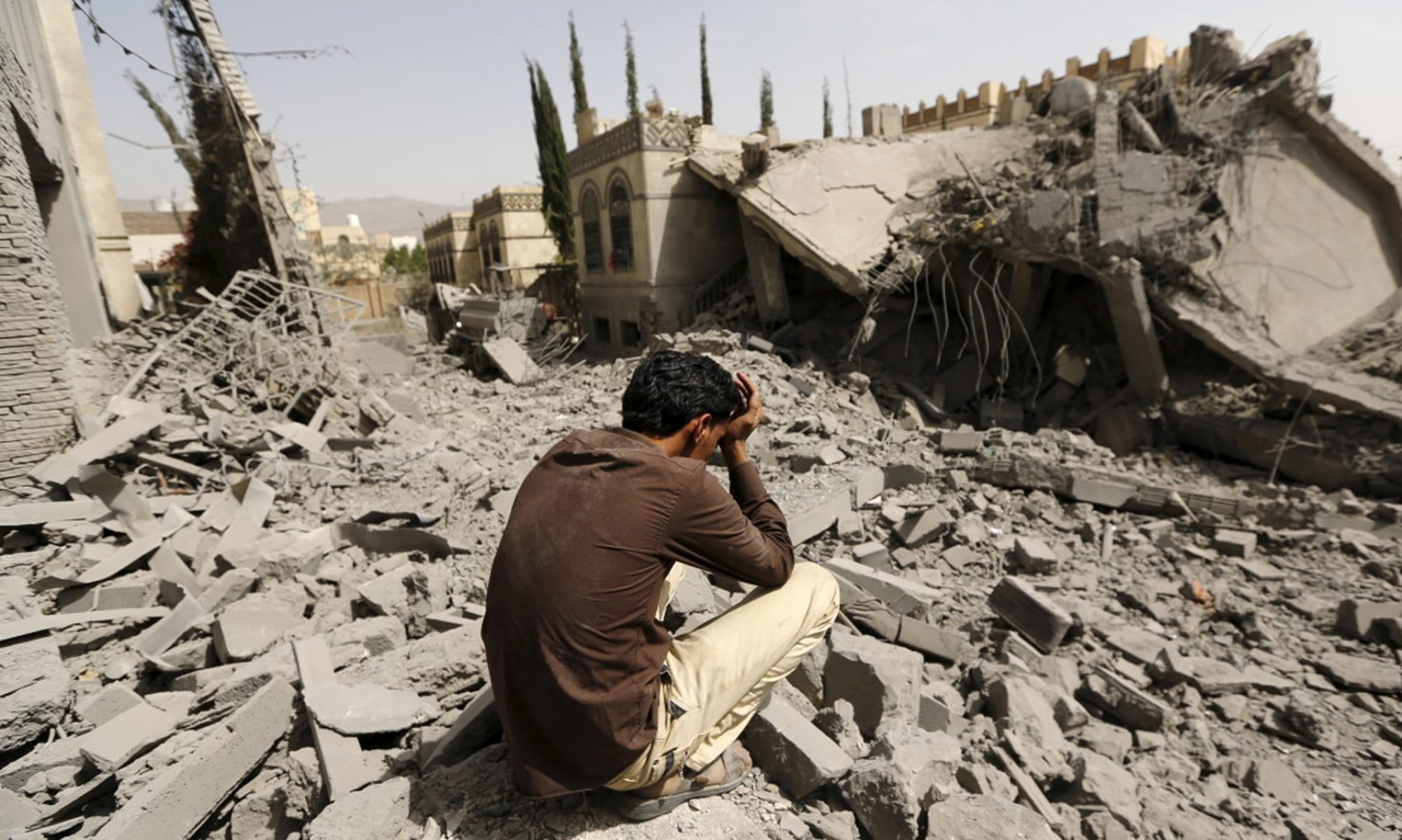
The United States dropped 6,727,084 tons of bombs on 60 to 70 million people in southeast Asia, more than triple what it had dropped in Asia and Europe combined in World War II. Simultaneously, it launched an equally massive attack with ground artillery. It also sprayed from the air tens of millions of liters of Agent Orange, not to mention napalm, with devastating results. The effects remain today. Tens of millions of bombs remain unexploded, and increasingly dangerous, today. A 2008 study by Harvard Medical School and the Institute for Health Metrics and Evaluation at the University of Washington estimated 3.8 million violent war deaths, combat and civilian, north and south, during the years of U.S. involvement in Vietnam, not counting hundreds of thousands killed in each of these places: Laos, Cambodia, Indonesia. Some 19 million were wounded or made homeless in Vietnam, Laos, and Cambodia. Many millions more were forced to live dangerous and impoverished lives, with impacts lasting to this day.
The U.S. soldiers who did 1.6% of the dying, but whose suffering dominates U.S. movies about the war, really did suffer as much and as horribly as depicted. Thousands of veterans have since committed suicide. But imagine what that means for the true extent of the suffering created, even just for humans, ignoring all the other species impacted. The Vietnam Memorial in Washington D.C. lists 58,000 names on 150 meters of wall. That’s 387 names per meter. To similarly list 4 million names would require 10,336 meters, or the distance from the Lincoln Memorial to the steps of the U.S. Capitol, and back again, and back to the Capitol once more, and then as far back as all the museums but stopping short of the Washington Monument. Luckily, only some lives matter.
In Laos, about a third of the country’s land remains ruined by the heavy presence of unexploded bombs, which continue to kill large numbers of people. These include some 80 million cluster bomblets and thousands of large bombs, rockets, mortars, shells, and land mines. From 1964 to 1973, the United States conducted one bombing mission against poor, unarmed, farming families every eight minutes, twenty-four/seven — with a goal of wiping out any food that could feed any troops (or anybody else). The United States pretended it was delivering humanitarian aid.
Other times, it was just a matter of littering. Bombers flying from Thailand to Vietnam would sometimes be unable to bomb Vietnam due to weather conditions, and so would simply drop their bombs on Laos rather than perform a more difficult landing with a full load back in Thailand. Yet other times it was a need to put good deadly equipment to use. When President Lyndon Johnson announced an end to bombing in North Vietnam in 1968, planes bombed Laos instead. “We couldn’t just let the planes rust,” explained one official. The poor today in Laos cannot find access to good healthcare when injured by old bombs, and must survive disabled in an economy few will invest in due to all the bombs. The desperate must take on the risky task of selling the metal from bombs they successfully defuse.
Cambodia was treated roughly as Laos was, with similar and predictable results. President Richard Nixon told Henry Kissinger who told Alexander Haig to create “a massive bombing campaign . . . anything that flies on anything that moves.” The hard-core right-wing Khmer Rouge grew from 10,000 in 1970 to 200,000 troops in 1973 via recruitment focused on the casualties and destruction of U.S. bombing. By 1975 they’d defeated the pro-U.S. government.
The war on the ground in Vietnam was equally horrific. Massacres of civilians, the use of farmers for target practice, free-fire zones in which any Vietnamese person was deemed “the enemy” — these were not unusual techniques. Elimination of population was a primary goal. This — and not kindness — drove the greater acceptance of refugees than has been practiced during more recent wars. Robert Komer urged the United States to “step up refugee programs deliberately aimed at depriving the VC of a recruiting base.”
The U.S. government understood from the start that the elite military faction it wanted to impose on Vietnam had no significant popular support. It also feared the “demonstration effect” of a leftist government opposing U.S. domination and achieving social and economic progress. Bombs could help with that. In the words of the U.S. military historians who wrote The Pentagon Papers, “essentially, we are fighting the Vietnamese birth rate.” But, of course, this fighting was counter-productive and simply generated more “communists,” requiring further increases in violence to combat them.
How do you get people who think of themselves as good and decent to shell out their money and their support and their boys to slaughter poor farmers and their babies and their elderly relatives? Well, what do we have professors for, if we can’t accomplish such feats? The line developed in the U.S. military-intellectual complex was that the United States was not murdering farmers but, rather, urbanizing and modernizing countries by driving peasants into urban areas through the benevolent use of bombs. As many as 60 percent of the people in the central provinces of Vietnam were reduced to eating bark and roots. Children and the elderly were the first to starve. Those who were driven into U.S. prisons and tortured and experimented on were, in the end, mere Asians, so that the excuses didn’t really have to be all that persuasive.
Millions in the United States opposed the war and worked to stop it. I’m not aware of any monuments to them. They won a close vote in the U.S. Congress on August 15, 1973, to end the bombing of Cambodia. They forced an end to the whole horrible enterprise. They forced a progressive agenda of domestic policies through the Nixon White House. They compelled Congress to hold Nixon accountable in a manner that seems thoroughly foreign to the U.S. Congress today. As peace activists in recent years have marked the 50th anniversary of each particular effort for peace, one question has offered itself to the U.S. society as a whole: When will they ever learn? When will they ever learn?